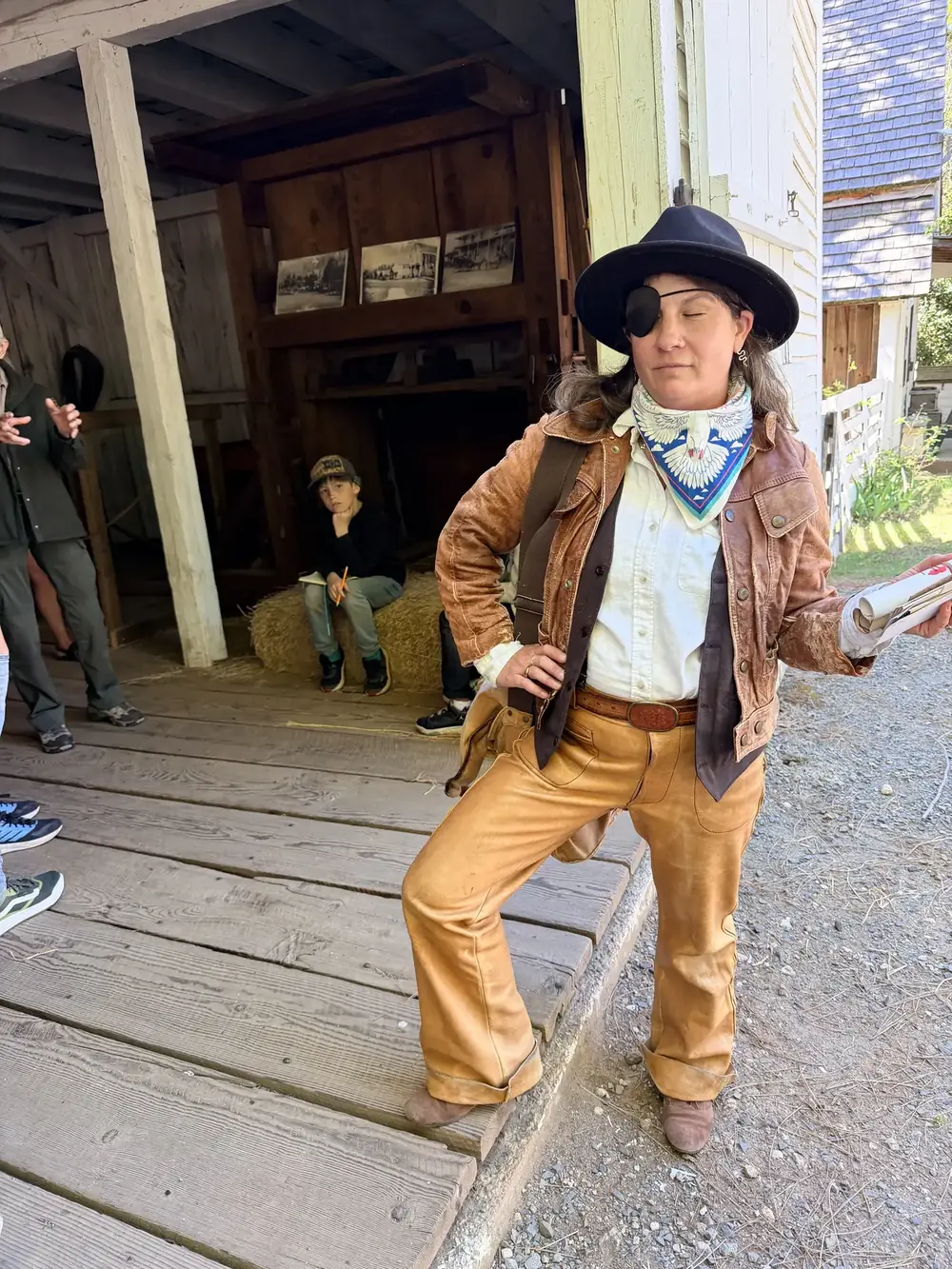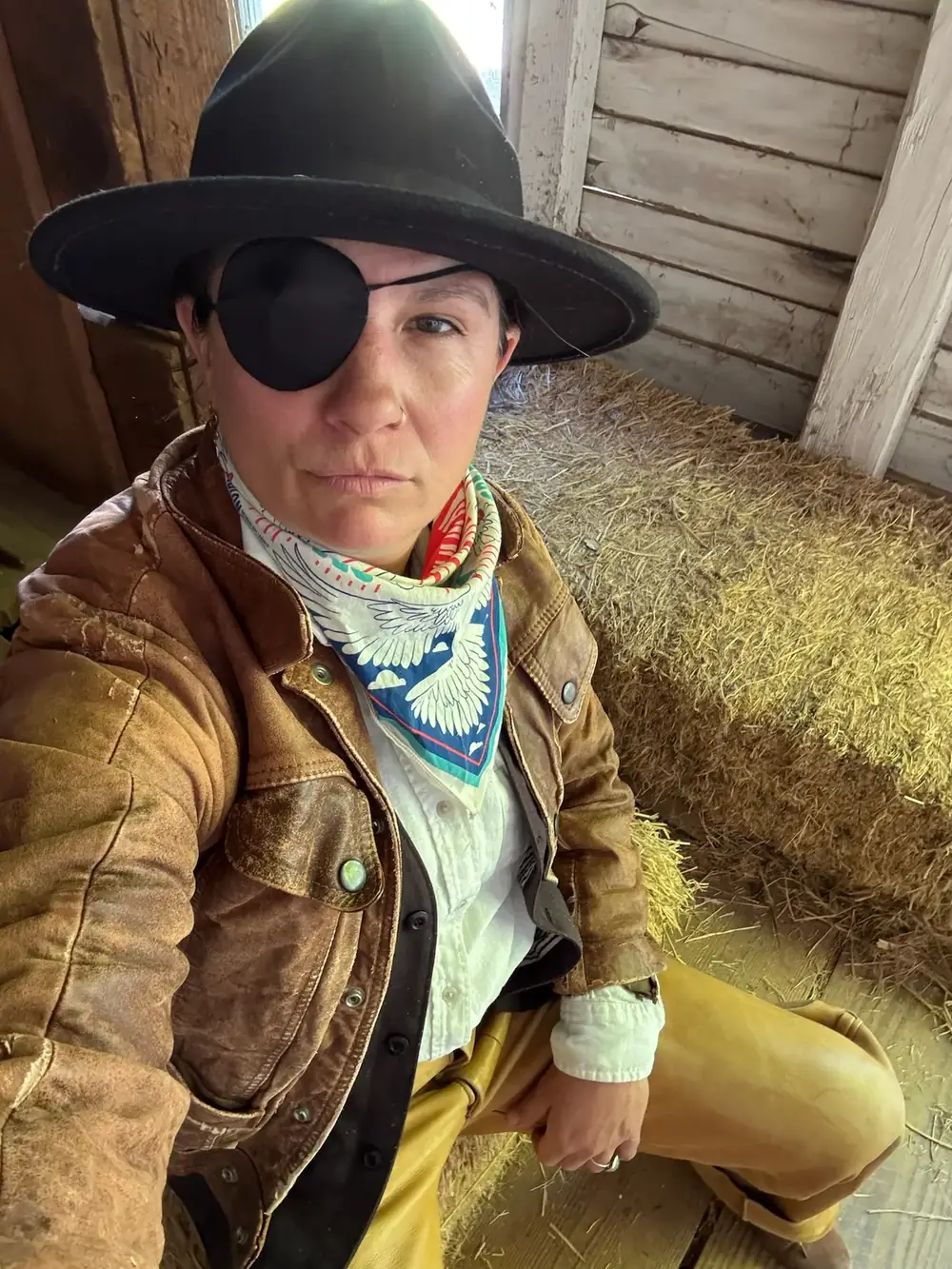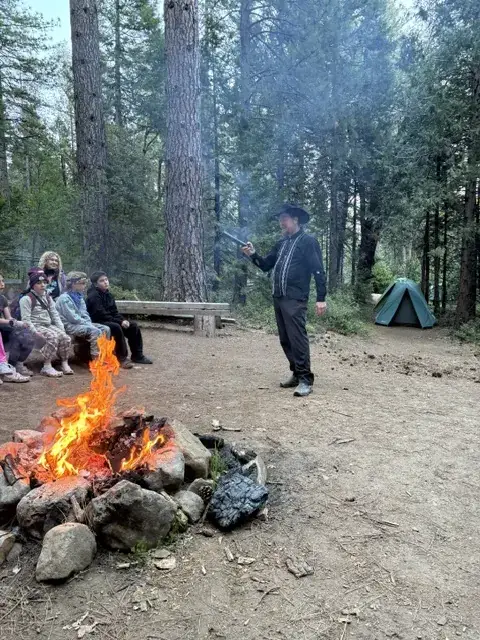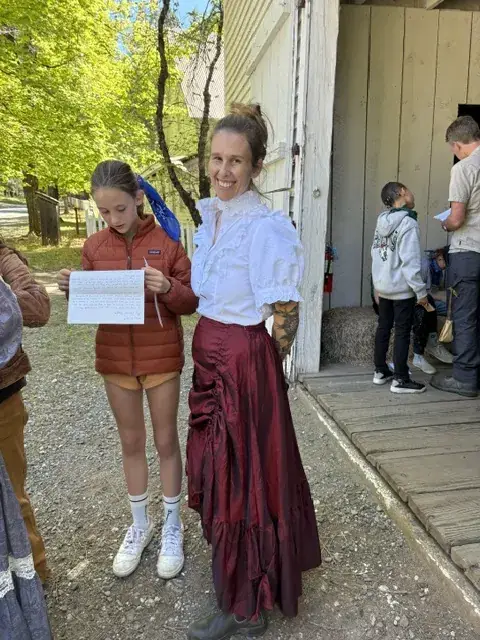
North Bloomfield — The Townsfolk

🏪

Rush Dix Skidmore

Saloon keeper & banker

North Bloomfield, 1857–1911

Came to North Bloomfield as a baker, switched to the saloon business after a hand injury. Became one of the wealthiest citizens in town: notary public, agent for the stage lines, mining recorder, philanthropist.

He grubstaked struggling miners — every loan made verbally, every one recorded in his black book. When a debt was past due, Skid produced the book. The miner always paid.

Always in a suit and tie. History buff. Sponsored the town baseball team.

"The girls were the apple of R.D. Skidmore's eye and no expense was spared in their attire or education."
⚗️

John Knotwell

Druggist & Justice of the Peace

North Bloomfield, 1876–1901

Part-owner of the Smith-Knotwell Drugstore. Could fix sore muscles, stomach aches, coughs, and rashes. Also served as justice of the peace and county board supervisor.

Many remedies of the time contained morphine — a powerful painkiller that didn't treat the illness; you just couldn't feel the pain anymore.

Married Nettie Smith, the founder's daughter, on July 20, 1881. Died of pneumonia at 66. Buried in the North Bloomfield Cemetery.

🔨

Mr. Smith — The Blacksmith

Blacksmith

North Bloomfield

Came to North Bloomfield to pan for gold. As a skilled blacksmith, he quickly discovered he could make far more money making Penstock Pipes for the Malakoff monitors than sifting gravel.

Made and repaired: hydraulic monitors, Penstock Pipes, horseshoes, pots, pans, farm tools. The mine couldn't run without him.

Rick the blacksmith brought this character to life for the kids — and every student forged their own coat hook to take home.
🏗️

Hamilton Smith Jr.

Engineer

North Bloomfield, 1872–1874

Called in to solve an impossible problem: the Malakoff pit was filling faster than the Hiller Tunnel could drain it. Smith designed a new drain tunnel — 7,878 feet long, drilled through solid bedrock.

His solution: sink 8 shafts at 1,000-foot intervals, send two crews to the bottom of each shaft digging in opposite directions, 15 crews simultaneously. Completed November 15, 1874 — a full year ahead of schedule. Still considered one of the engineering feats of its era.

💣

Lucky Dave Bowen

Hydraulic miner

North Bloomfield

Worked down in the diggings where the monitors blasted hillsides from 500 feet away. A watchman was always posted to watch for mudslides. One day the cry came too late — a mudslide covered Dave Bowen completely.

A second slide happened before anyone could reach him.

That second slide uncovered his head. He was alive. The other men dug him out with their bare hands.

That's how he got the name Lucky Dave Bowen. He lived to tell the story himself.
🎶

Doc DeMillieu

Doctor

North Bloomfield

A Frenchman, loyal to France but also to North Bloomfield. Always there when needed — pulling teeth, delivering babies, sewing up wounds. Traveled to patients by horse and buggy across rough mountain roads.

Loved music. Played clarinet in the town band. The kind of man a town absolutely depends on and rarely thanks enough.

🌉

Benoit Fauchery

French engineer

North Bloomfield, 1859

Designed the Magenta Flume — an aqueduct that carried water across a deep canyon to feed the hydraulic monitors. 1,400 feet long, 160 feet tall, built from local timber in 1859.

When it was completed, both French and American flags were raised, cannons fired salutes, and daring ladies and gentlemen walked across the top of the flume in celebration.

📒

Pinky

Bookkeeper & embezzler

Sawmill Flat

Bookkeeper and paymaster for the Malakoff dam building crew. Kept people on the payroll who didn't exist. Forged the boss's name on checks, then once a month traveled to Nevada City with friends to cash them and have a weekend on the town.

The Gold Rush wasn't only about gold. Wherever money flowed, someone found a way to redirect it.

🪟

Old Man Eaves

Watchmaker & dreamer

North Bloomfield

Made his living by ground sluicing in the ravines and as a watchmaker. Lived in a cabin in the woods with a dozen or more cats.

He loved to dream of flying like the birds. People told tales of how he once built himself a pair of wings, leapt from a high rock, and nearly broke his neck.

The Cemetery — Real People, Real Ends

🪦

Willy Blood

Miner at Derbec

Died 1885, age 22

During a card game, Willy Blood was shot through the heart. He was 22 years old. Will McKuan was convicted of the crime and sentenced to 10 years at Folsom Prison.

His weathered wooden tombstone is still in the North Bloomfield Cemetery. Look for it.

Michael Perfumo

Miner

Disappeared January 10, 1858

Left Humbug for Marysville on January 10, 1858. Never arrived. His injured dog was found near the river. Then: his hat, his coat, his shoes — with blood on them — near an old mine shaft.

Nobody ever found out what happened.

The mystery was never solved. It has been open since 1858.
👶

Eddie Sherwood

Resident of North Bloomfield

Died age 2

Drowned in a rain barrel behind the family home. He was two years old.

Life in a Gold Rush boomtown was hard in ways that had nothing to do with gold. The cemetery holds many stories like Eddie's — brief lives, ordinary accidents, the fragility of everything.

💼

Julius Poquillion

Founder, North Bloomfield Gravel Mining Company

Died June 10, 1876, age 45

Bought 1,535 acres of abandoned claims at depression prices in 1860, convinced San Francisco investors to back him, and built the largest hydraulic mining operation in the world.

The company he built outlasted him by decades. He died by suicide in San Francisco at 45, the year the operation finally reached full capacity.

Miners & Pioneers

💧

Anthony Chabot

Engineer & inventor

1813–1888

Co-inventor of hydraulic mining. In 1852, Chabot made a 100-foot hose from strips of saddlebag canvas — the first step toward bringing water to the diggings instead of carrying gravel to the water.

Left the gold fields in 1856. Created San Francisco's first water system. Built the dam on San Leandro Creek — now Lake Chabot. Largely responsible for water systems in Oakland and San Jose.

Died a multimillionaire in 1888. Left over $85,000 to Bay Area charities. Chabot Observatory is named after him.
🔧

Edward Matteson

Inventor — hydraulic mining

Died 1903, Nevada City

Suggested attaching a nozzle to the end of Chabot's canvas hose — the moment hydraulic mining was born. Also invented a hydraulic derrick for moving boulders, a platform for prying loose cemented materials, and a device to keep debris out of hydraulic intakes.

Never sought patent rights for any of it.

Died a poor man in Nevada City in 1903. His gravesite is still unknown.
🏮

Ah Coon

Chinese miner & gold panner

North Bloomfield

Lived in the Chinese section of town — the "China Garden." A cross-looking fellow that most kids steered clear of in town.

But get him down by the river and he was an expert panner: with a few motions, he held the pan in one hand and washed the gold, making it look effortless.

The China Garden fed the whole town. While miners scrambled for gold, the Chinese community grew the vegetables everyone ate.

💀

Michael Cummings

Hydraulic miner

Died age 57, North Bloomfield

Came from Ireland by way of the Isthmus of Panama. Worked for the North Bloomfield Gravel Mining Company for over 30 years — a hard and dangerous job. His brother Edward owned the dance hall.

Died when a dynamite blast exploded prematurely, at age 57. His daughter Mary had already died of diphtheria at age 8.

🗺️

The Yankee Argonaut

Campfire character · Around the Horn

California, 1849

Six months at sea around Cape Horn. 183 passengers — all men except one 12-year-old boy. The food was terrible, but the boredom was worse.

Captain Swain — "the wild bull of the sea" — raced another ship through the deadly Strait of Magellan and won by risking everyone's lives. They arrived in California alive, barely, and considered themselves lucky.

🌵

The Mexican Miner

Campfire character · Overland from Sonora

California, 1849

Came overland from Sonora — a long, hot journey on foot with one mule to carry supplies. Prospectors from Sonora were among the first to reach the gold fields in summer 1848.

Surprised to find Yankees acting like California had always been theirs, even though it belonged to Mexico until two years earlier. Plans to make money fast and go home.