.webp)
.webp)
.webp)
.webp)
.webp)
.webp)
.webp)
_result.webp)
_result.webp)
.webp)
.webp)
.webp)
.webp)
Act I · Wednesday, May 13
You're a greenhorn. You have no gold, no lodging, no supplies. By the time the sun sets, you'll have been robbed, grubstaked, taxed, and maybe cleaned out at the gambling table. Welcome to the Gold Rush.
Before the kids had even unpacked, it happened. Two bandits stepped out and the hold-up was on. Empty your pockets. Hand it over.
It became clear fast: no gold, no lodging paid, no mining supplies. They were greenhorns — brand new to California, without a claim or a coin to their name.
Then came the offer. A grubstake — a loan of miner's bucks to get started, to be repaid after tomorrow's panning. Take the deal or go without. Every kid took the deal. That's how you became a forty-niner.
_result.webp)
_result_1.webp)
_result.webp)
_result.webp)
_result.webp)
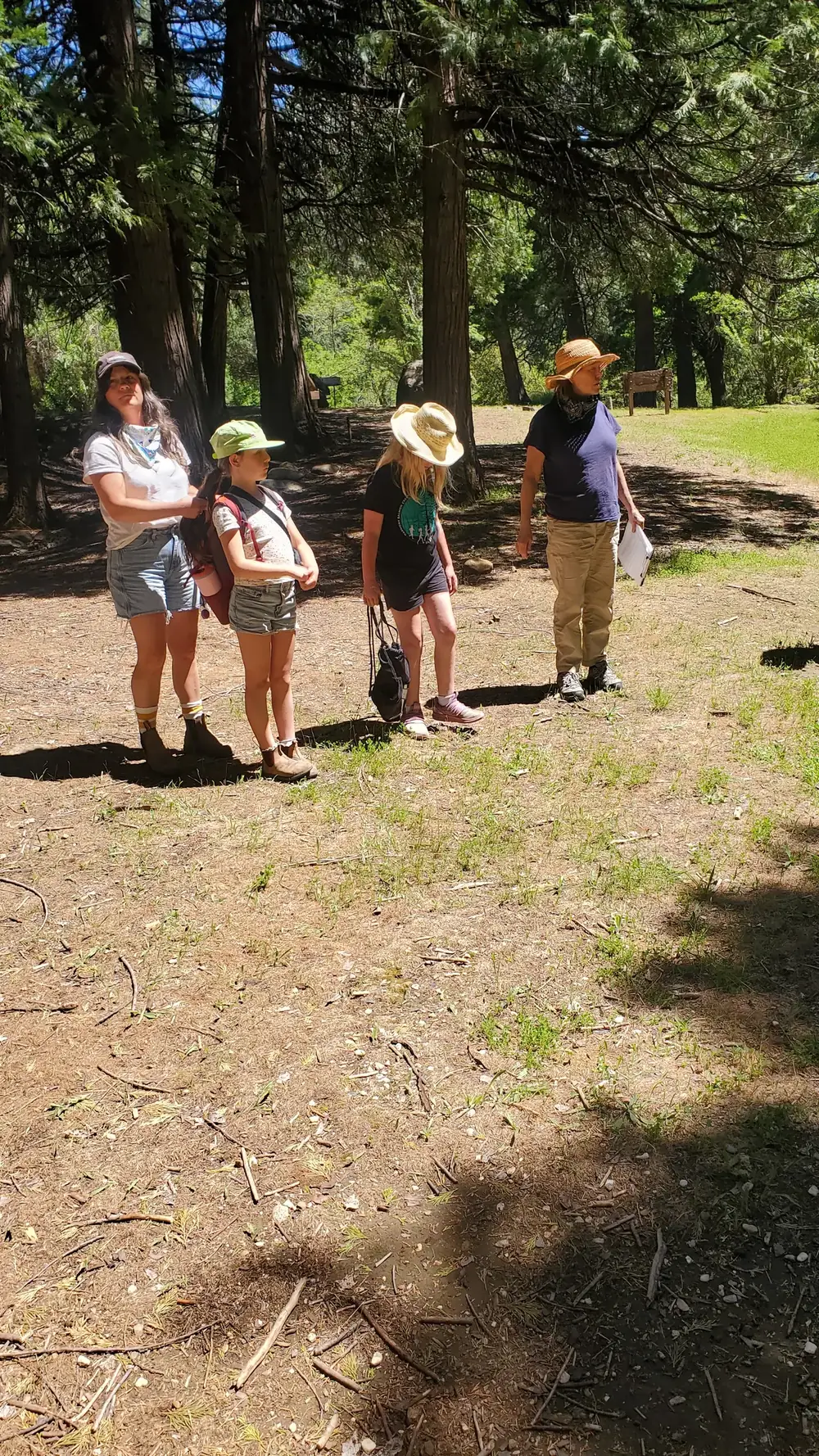
Every miner needed a crew. The kids were divided into four mining groups, each given a color-coded bandana — and each bandana carried a hidden meaning about how they'd be treated in Gold Rush California.
Representing white American miners. The favored group. More opportunities, better treatment, first pick at the claims.
Representing Chinese, Native, Black, and Mexican miners. The most discrimination — worst claims, devalued gold, told to go home.
Brand new arrivals. Just that — fresh off the boat, learning the rules as they went.
Representing European and South American miners. More subtle discrimination — not as bad as red, but not as free as gold.
The bandana system wasn't explained up front. Kids experienced the different treatment first, and put the meaning together as the trip went on. That was the point.
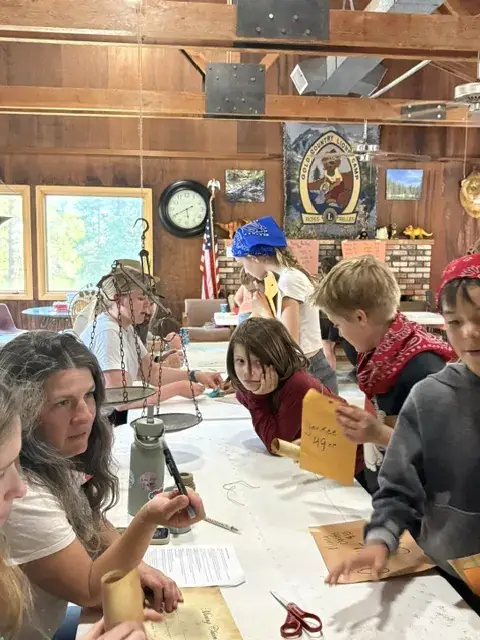
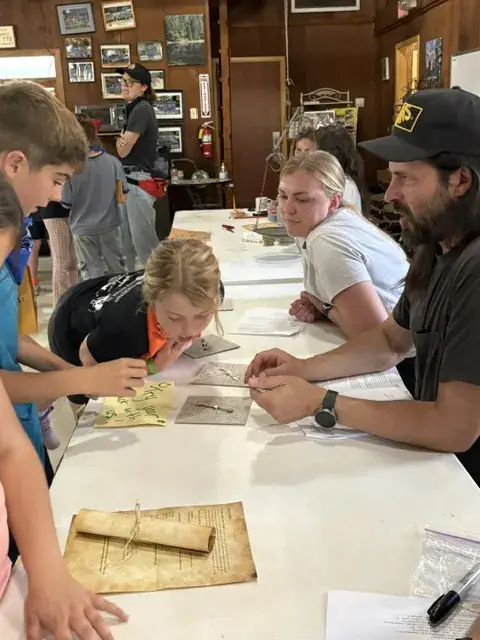
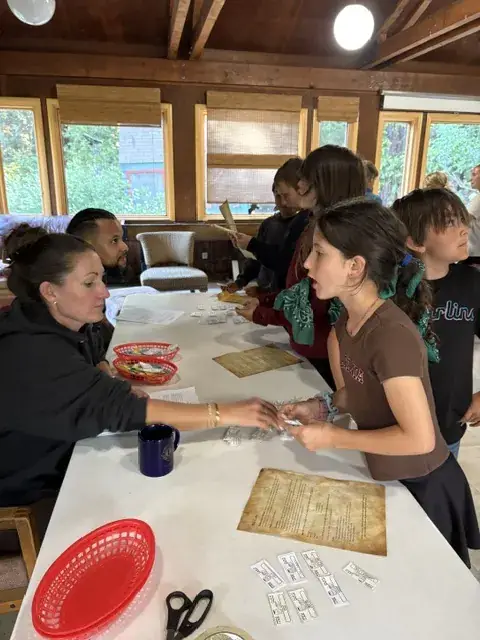
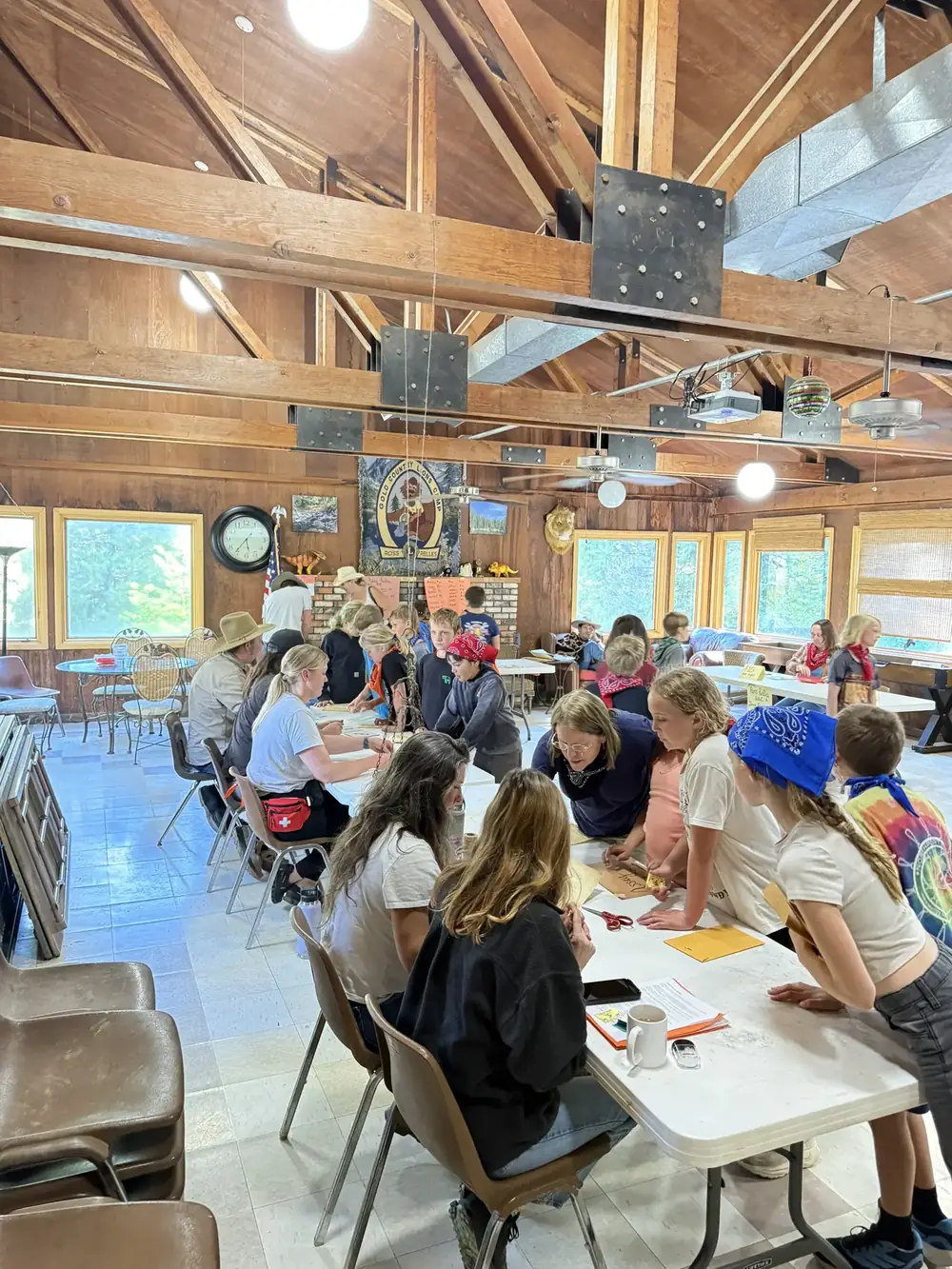
Wednesday evening, the camp lodge became a Gold Rush boomtown. The Trading Post simulation was the first real test: could you hold onto your grubstake, or would it drain away before morning?
Real miner's bucks in hand, the kids moved between stations — buying, selling, gambling, and getting taxed whether they liked it or not.
Buy supplies for tomorrow's mining. You need equipment to work a claim — and supplies cost money you may not have.
Weigh and value your gold. Not all gold is equal — and the assayer decides what yours is worth.
Store your miner's bucks. Or don't. Plenty of miners kept everything in their poke — and lost it all at the gambling table.
Pay for your lodging. The grubstake you borrowed? Some of it goes here first, before you've seen a flake of gold.
The tempting one. The odds are against you — they always were — but plenty of miners thought this time would be different. It usually wasn't.
Answer a Gold Rush question correctly and earn bonus gold. The one station where knowing something paid off directly.
Most forty-niners didn't get rich from gold. The people who got rich sold supplies, ran hotels, operated saloons — or, like Levi Strauss, made pants. The Trading Post taught this the hard way: by the end of the evening, the money had mostly moved from the miners to the merchants. Just like 1849.
_result.webp)
_result.webp)
_result.webp)
_result.webp)
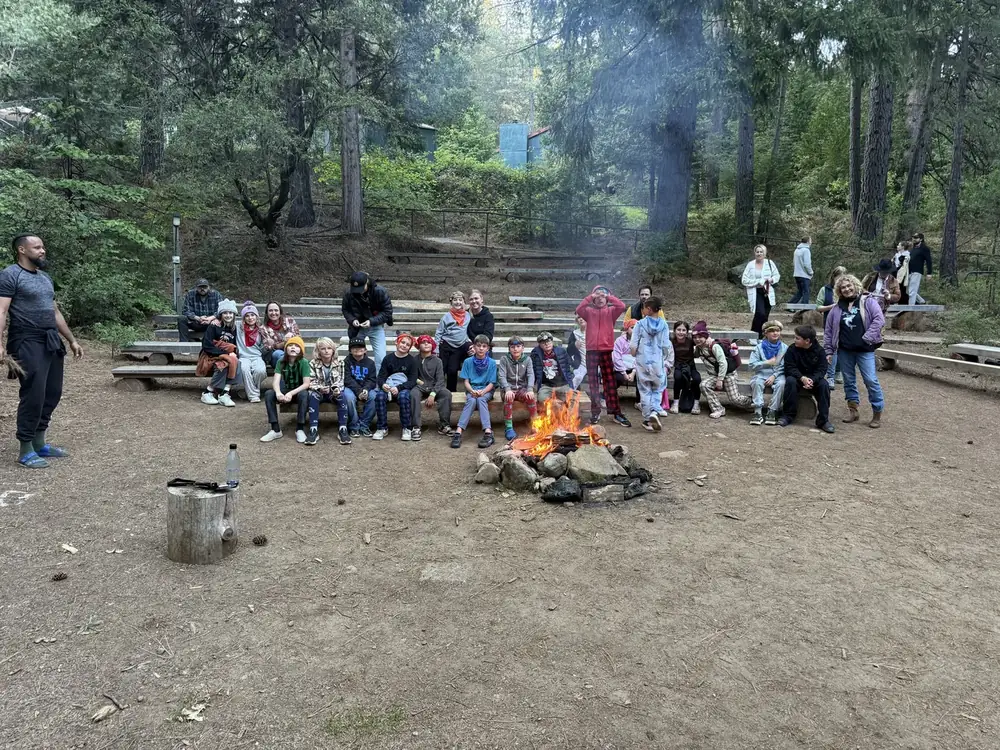
Wednesday evening · Ross Relles
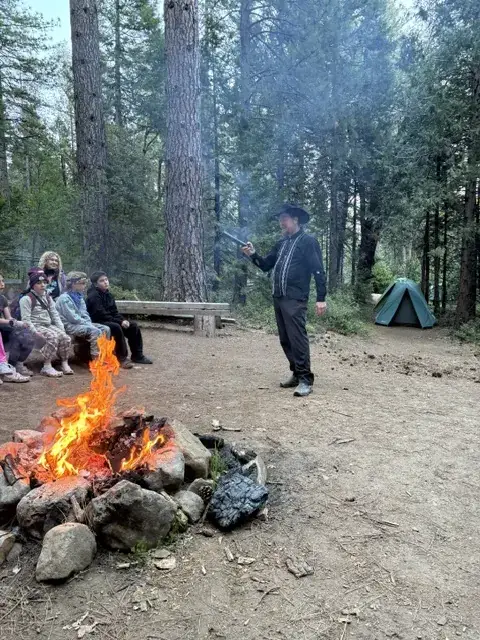
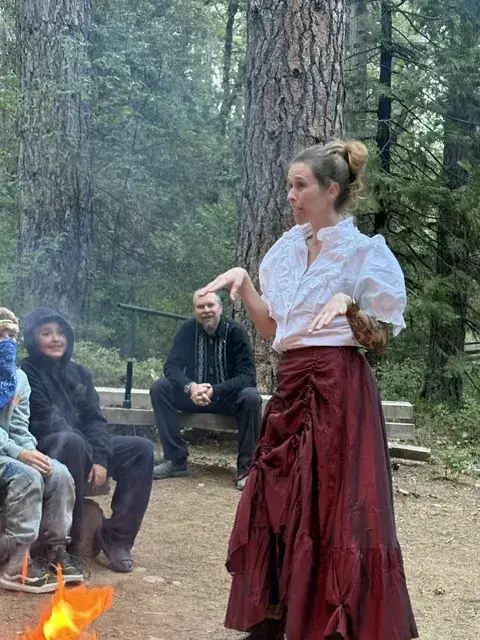
After dinner, the fire was lit. A group of newly arrived gold seekers gathered around it — each with a different story of how they got to California. Five very different journeys. One shared hope.
Sailed around Cape Horn — six months at sea. 183 passengers, all men except one 12-year-old boy. The food was terrible, but the boredom was worse. Captain Swain raced another ship through the deadly Strait of Magellan and won — by risking everyone's lives.
Crossed the Isthmus of Panama on foot — the shortcut from the East Coast. Faster than the Horn, but the jungle had its own ideas about what "shortcut" meant. Malaria, mud, and heat the whole way through.
Overland trail. Twenty-five covered wagons, three miles per hour, five months walking. Worst part: getting wagons across rivers and deserts. At the end, coming over the Sierra Nevada, people threw away precious possessions they'd carried the entire way — just to make the final climb.
Came overland from Sonora — a long hot journey on foot with one mule. Surprised to find Yankees acting like California had always been theirs, even though it belonged to Mexico until very recently. Planning to make money fast and go home.
Only leftover claims on the creek. Gold not worth what others' gold was worth — nothing he could do about it. Started growing vegetables in the China garden; makes more money that way. Plans to go home as soon as he has enough. His grandmother worries that if he dies in California, his soul will wander there forever.
.webp)
.webp)
.webp)
.webp)
.webp)
.webp)
.webp)
.webp)
.webp)
.webp)
.webp)
.webp)
.webp)